
Basement insulation in Hollister CA - warmer floors and walls that stay dry
Cold floors over the basement and a damp, chilly room down there? We insulate the walls with a first layer that can handle moisture.
I look at every basement myself
I'm the one who comes out to look at your basement, not a salesperson. I'd rather tell you a job isn't worth doing than sell you one, and I'll say so right there at the bottom of the stairs.
In business since 2017
I started this business in Hollister in 2017, after years on other people's crews that began with summer jobs in school. Nine years in, we're still best known for the unglamorous part, finding the gaps and problems before any insulation goes in.
Fully licensed and insured for basement work
We're fully licensed and insured, and that holds for one basement wall the same as a whole house. Satisfaction guaranteed on every job. Want me to look at yours? Call (831) 245-4007 or send the form.
Insulating basement walls in Hollister
Basement insulation in Hollister means lining the foundation walls, and in a house that's already built it usually goes on the inside, because digging out around the foundation is rarely practical. It helps when the basement feels cold, the floors above are chilly or sound carries through.
Most calls start with a cold basement, a cold floor over it and a power bill that says the heat is going somewhere. The first thing I ask is whether the walls are bare or already finished, because that decides the method before anything else does. Then I want to see the concrete itself, since a wall that's wet or seeping changes the plan.
Price moves with how much wall there is, the method and what I find first. Foam costs more than a framed wall with batts, and water coming in has to be stopped before anything covers it. The schedule turns on those fixes, plus how much of the basement has to be cleared so the crew can reach the walls. We're based in Hollister and work in the cities around it, and the written estimate is where you'll see what your basement takes.
Basement wall insulation, foam choices and safety checks
The first layer handles moisture
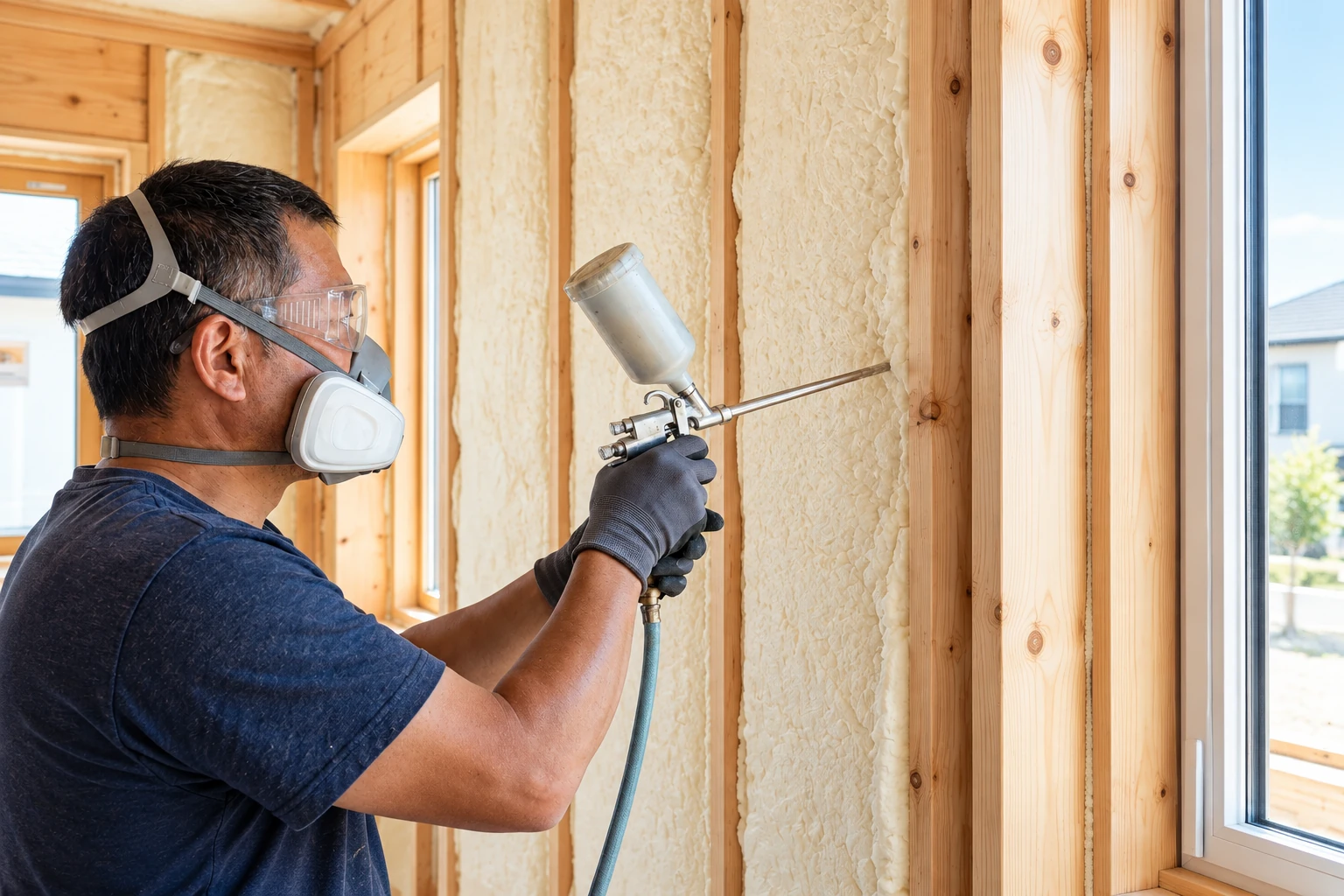
Whatever touches a basement wall has to handle moisture, so we're picky about that first layer. On bare walls we usually go with rigid foam board or closed-cell foam insulation, dense foam that blocks moisture and seals air as it goes on. Closed-cell costs more, and on a basement wall I think it earns it, since one coat does both jobs. Foam that isn't fire-rated should be covered with drywall or another fire-rated material, so plan on a finished wall. Your quote says which first layer it includes.
Framed walls and the room side
A framed wall inside the foundation can take batts or blown-in fill, loose insulation blown through a hose, once the first layer is right. What faces the room matters too. Plastic sheeting or foil-faced board on the room side can trap moisture in the wall, so basement guidance points to Kraft-faced batts, the paper-backed kind, or latex paint on the drywall. Open-cell foam insulation is softer and quiets sound well, but it lets moisture through, so we keep it off the concrete.
Gas appliances and a radon check
If a natural-draft water heater or furnace sits in the basement, the usual checklist for this work calls for a combustion safety test, which checks that exhaust isn't spilling back into the house, so tell us about those when you call. The same checklist calls for a radon test kit for you at the end, so you can see where your levels land after the work. The state keeps a radon potential map of where homes are more likely to top the EPA's action level, though its studies cover only part of California.
Get a free on-site estimate for your basement
We reply within one business day, and the estimate is free with no obligation. After you send the form, I come out to look at your basement myself and you get a written estimate listing what needs fixing first.
(831) 245-4007How a basement insulation job goes
You call, I come look
You call or send the form, and we get back to you. Then I come out to look at the basement myself, checking for water coming in, pest damage and old materials like asbestos or lead paint, because none of that should get buried under insulation.
A written estimate, then permits
You get a written estimate that lists what needs fixing first and what we'd do, including which first layer goes against the wall. I check permit rules with the building office for your address, and we handle the permit if the job needs one.
Our crew installs, I check
Clear boxes and shelves away from the walls before the crew arrives. They do the install, I check the work myself before we call it done, and then we walk through it with you so you see what went in.
Basement insulation questions from Hollister
What insulation works for a finished basement in Hollister?
Finished walls can usually be insulated by blowing fill in through small holes drilled in the drywall, so the wall stays up. Before I recommend that, I want to know whether the concrete behind it stays dry, because a damp wall is a reason to open it up first.
Why does insulation in my basement stay damp?
Fiberglass or cellulose pressed against a basement wall can soak up a lot of moisture and stay damp month after month, because the concrete keeps feeding it moisture from the ground. That's why we're picky about the layer touching the wall. If yours is already wet, it usually has to come out before anything new goes in.
Who is allowed to install insulation in California?
In California, installing any insulating material for temperature or sound control is work the state contractor board puts under an insulation and acoustical contractor, and basement walls are no exception. That covers foam, batts and blown-in fill alike, so ask whoever bids your job what license they carry.
How much can an insulation contractor ask for up front in California?
California caps a home improvement down payment at $1,000, and on a smaller contract the cap is lower. Payments after that have to be listed in the contract and tied to work done or materials delivered, so you shouldn't be paying far ahead of the job.