
Commercial insulation in Hollister CA - a building that stays dry under the roof
Roof sweating onto your stock, or a shop too hot by noon? We insulate it so the building holds temperature and stays dry.
I look at your building myself
When you call, I'm the one who comes out to look at the roof, walls and framing, not a salesman. Our crew does the install, and I check the work before we call it done.
Running our own crews since 2017
I started this business in Hollister in 2017, after years on other people's crews and school summers crawling attics. We're known for the dull part, finding the gaps and problems before any insulation goes in.
Fully licensed and insured on every building
We're fully licensed and insured, and we'd rather you ask about it than assume. Satisfaction guaranteed on every job. Call (831) 245-4007 or use the form below to set up a time for me to come look.
Insulating commercial buildings in Hollister
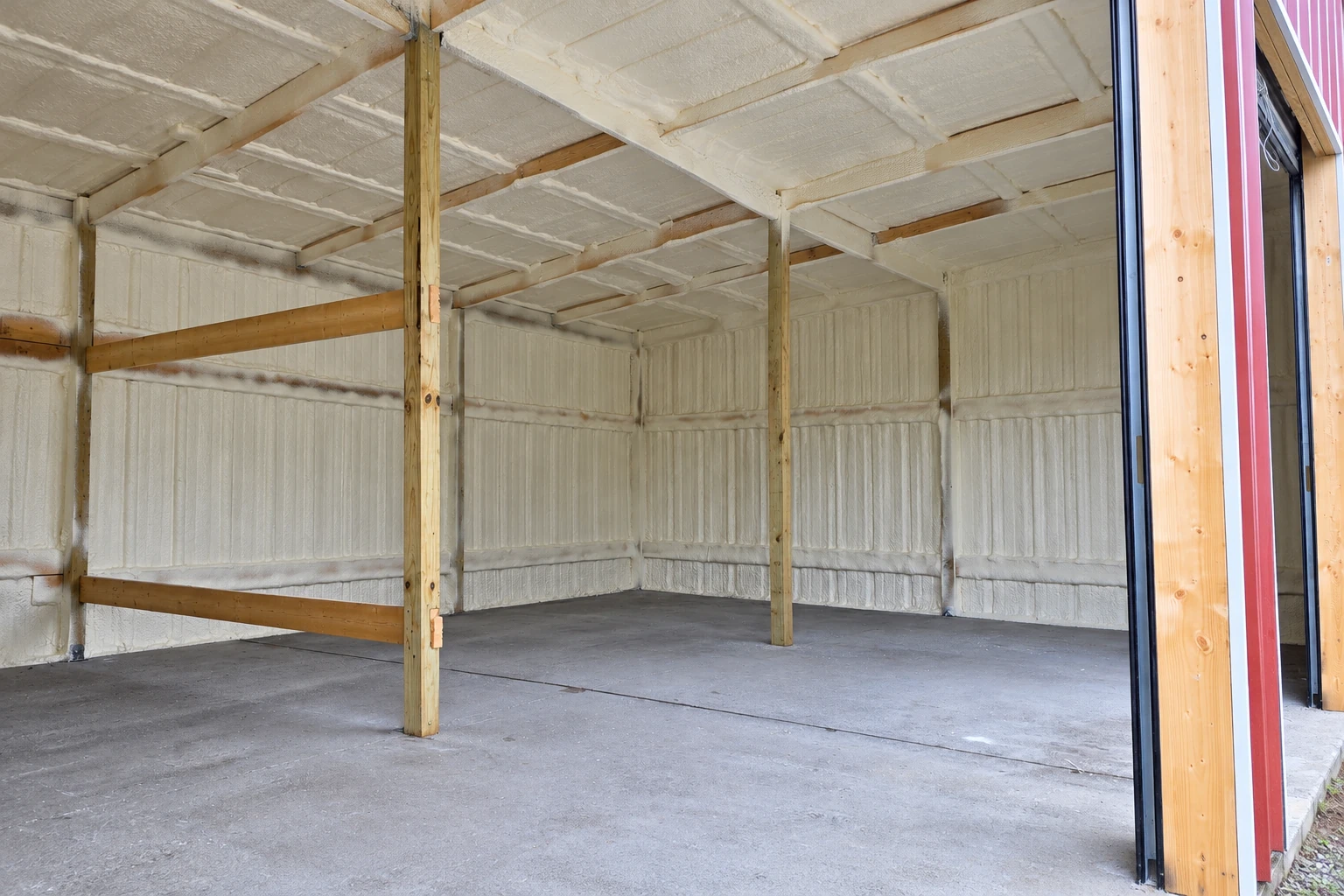
Commercial insulation puts insulating material into a shop, warehouse or office to control temperature, sound or both. It matters most in metal buildings, where a bare roof sheet can get cold enough to sweat, dripping water onto your stock and rusting the steel that holds the roof up.
Most calls start with a symptom. Wet spots on the floor under the roof, a shop that bakes by afternoon, an office that's loud every time it rains. The first decision is whether your roof stays or a new one is coming, because that settles whether we work from inside or the insulation goes on from outside. If a reroof is on the calendar, tell me early, since its size can bring in the state's roof insulation rules covered in the questions below.
What moves the price is the roof and wall area, whether the roof stays, how the blanket gets supported and whether rust or old insulation has to be dealt with first. The schedule turns mostly on access, since we work around your stock, equipment and business hours. Your written estimate lists what needs fixing first and what we'd do, so you know where the money goes before anything starts.
Commercial insulation and the moisture work around it
Checking the steel before we plan
On a metal building, I check the roof sheet and framing for rust before we plan anything, because insulation over a rusty roof is just a rusty roof you can't see anymore. One supplier's guide also advises testing whether the structure can carry the added weight, which is worth knowing on an older building. If damp is also coming up from the ground under a raised floor, we handle that with vapor barrier installation or a crawl space vapor barrier, so the roof isn't carrying the whole fix.
Holding the blanket off the beams
Fiberglass blanket that gets clamped between the roof sheet and the beams is crushed flat there, and crushed blanket slows almost no heat. Foam spacer blocks, or a liner that hangs the blanket below the beams, win back much of that loss, and we'll show you how we hold yours up. If the blanket is faced and hangs over open air, California's quality standards count it as exposed, so the facing has to be tested and certified fire-retardant.
Materials that meet California's rules
California's Energy Code splits the state into climate zones, and the zone a building sits in sets the minimum efficiency its insulation has to meet. The state also lets builders install only insulation certified by the Department of Consumer Affairs, and products get checked against its directory of certified materials, so that's what goes into your building. We're based in Hollister and work in the cities around it, including Gilroy and Salinas. If you're not sure we come out your way, call and ask.
Get a written insulation plan for your building
We reply within one business day to set a time, and I come out to look at the building myself. The estimate is free, done on site, and comes with no obligation.
(831) 245-4007How a commercial insulation job goes
You call, I come look
Call or send the form and we'll get back to you to set a time. I come out to look at the roof, walls and framing myself, so have the building type, roof type, rough roof area and any reroof plans handy.
A written estimate, priorities first
You get a written estimate that lists what needs fixing first and what we'd do about it. If rust, a weak spot or a moisture problem has to come before the insulation, it says so at the top.
Crew installs, I check it
Our crew does the install, and I check the work before we call it done. Then we walk the building with you, so you can see how the blanket is held up and where everything went.
Commercial insulation questions from Hollister
Does our reroof in Hollister bring in California's roof insulation rules?
It does if the reroof covers half the roof or more, or more than 2,000 square feet, whichever is less. A small repair or an overlay of the existing surface doesn't trigger the Energy Code's roof insulation rules, so the kind and size of the roof job decide it. Bring the roofer's plan to the estimate.
Should we insulate a metal building from inside or re-roof from outside?
If the roof is staying, insulate from inside, and if you're already planning a new roof, do it from outside. Re-roofing from outside gives the best thermal result, while inside methods keep the roof you have. That's general guidance from a national supplier, so on your building I'd also weigh the roof's condition and your schedule.
Is open-cell or closed-cell spray foam better for a commercial building?
Closed-cell usually suits a metal roof better, since it's rigid, its sealed cells block moisture and it slows heat better than soft open-cell, though it costs more. One supplier's guide notes most codes want indoor foam covered by a thermal barrier like drywall, or tested as an assembly, so ask how a bid handles exposed foam.
Which California license class covers commercial insulation work?
California's C-2 Insulation and Acoustical Contractor class covers it. The Contractors State License Board defines that class as a contractor who installs any insulating material for temperature or sound control, which takes in roofs, walls and sound work in a commercial building.