
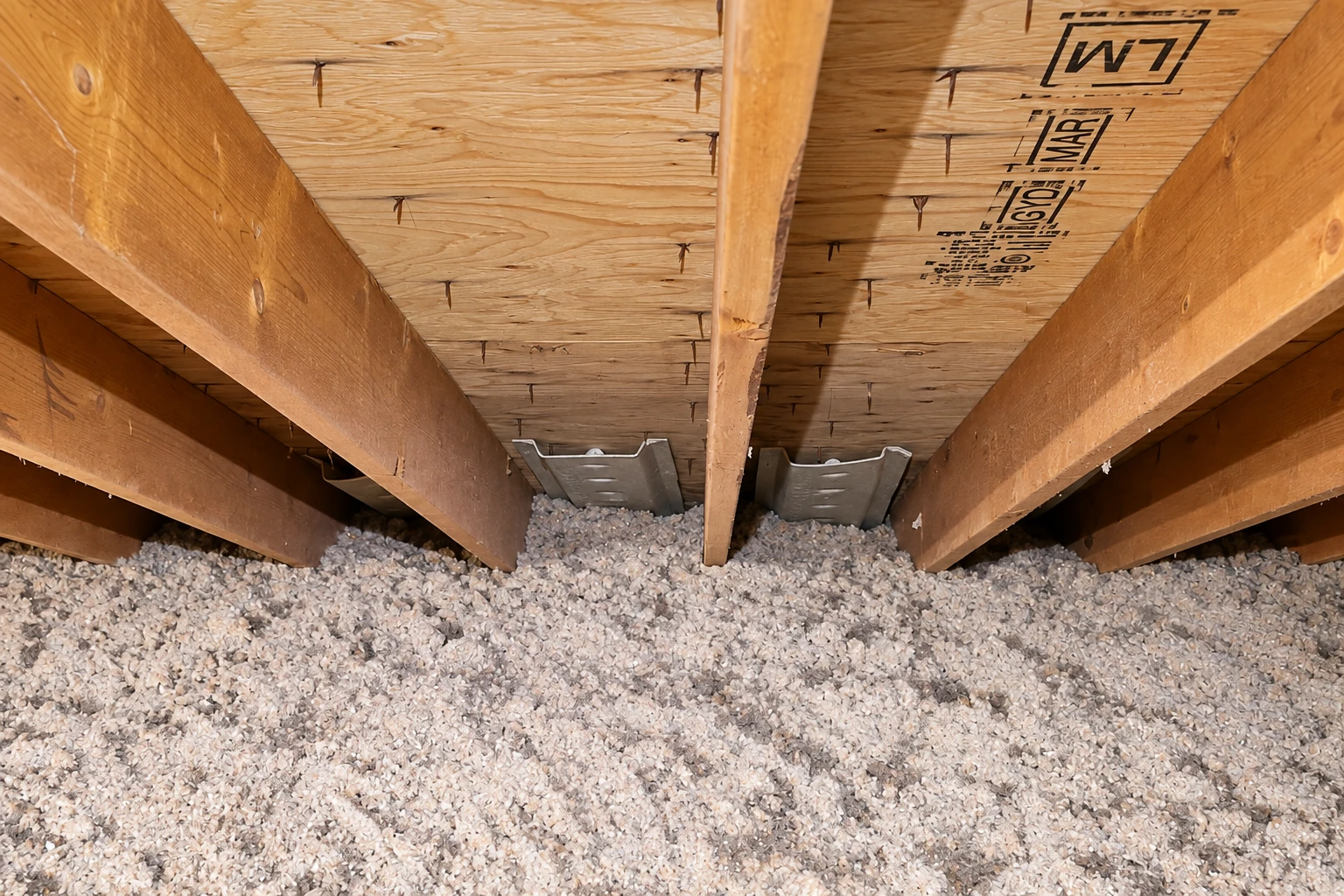
Blown-in insulation in Hollister CA - even coverage with the vents left clear
Hot upstairs or a drafty room over the garage? We seal the gaps, then blow in fill that covers the whole attic floor evenly.
I look at your attic myself
I come out to look at every job myself, before anyone quotes you a number. I started crawling attics on a summer crew back in school, so I know where the trouble hides, usually in the one corner you need kneepads to reach.
Finding the gaps first since 2017
We've run this business in Hollister since 2017, and we're best known for the unglamorous part. That means finding the leaks and anything unsafe before any insulation goes in, so the fill does the job you paid for.
Fully licensed and insured for attic work
We're fully licensed and insured, which matters when a crew is working above your ceiling and around your wiring. Satisfaction guaranteed on every job. Call (831) 245-4007 to set up your estimate.
Blown-in insulation for Hollister attics and walls
Blown-in insulation is loose fiberglass or cellulose fill that we blow through a hose across your attic floor, or into wall cavities through small holes near the top of each one. It's for Hollister homes with drafty rooms and a power bill that keeps climbing.
The price mostly turns on how big your attic floor is, how many inches are already up there and how many gaps need sealing before any fill goes down. House age matters too. In a home from the 1930s or earlier, we check for knob and tube wiring first, because that old wiring can be a fire hazard where insulation touches it. Your written estimate lists what needs fixing first and what we'd do.
The schedule mostly turns on what we find. Vermiculite, a light, pea-size, flaky gray mineral, stays untouched until an approved lab tests it for asbestos, and your local health department can name a lab, so that test comes before any attic work. California also sets efficiency standards for a home's outer shell by climate zone, so a Hollister house follows the standards for its zone. We're based here and work in the cities around it.
Blown-in insulation with air sealing and clear vents
Sealing the gaps before the fill
Before any fill goes down, we do the air sealing, closing the gaps in the attic floor around can lights, pipes, wires and the hatch, because insulation can't do its job with a draft blowing through it. It's also far easier on a bare floor than under a fresh layer. If the old material has to come out first, which the FAQ below covers, our insulation removal work clears it so we can reach those gaps. If a gas furnace or water heater sits in the attic, have an HVAC contractor run combustion safety testing after the sealing.
Clear soffit vents, even depth everywhere
We look at how deep the old layer sits before we quote, because that tells us how much fill your attic needs. We keep the soffit vents clear, since they let outside air into the attic. Baffles, also called rafter vents, belong in any estimate for this work, because they hold the fill back from those vents. A buried vent leaves an attic that can't breathe, and moisture shows up in the framing. We also carry the fill out to the edges, because thick in the middle and thin at the edges is common, and it's backward.
Loose fill or foam for your attic
Foam costs more, and it seals air and insulates in one go. For most attics, sealing the gaps and topping up with loose fill does the job for less, so that's usually where I land. The exception is ductwork living up there, where foam tends to earn its price. If you're thinking past the attic to the walls and floors, our home insulation work looks at the whole house, and I'd rather tell you a part of it isn't worth doing than sell it to you.
Get a free on-site estimate for your attic
We reply within one business day, and the on-site estimate is free with no obligation. After you send the form, I come out to look at your attic myself and you get a written estimate of what it needs.
(831) 245-4007How a blown-in job goes with us
You call or send the form
Call (831) 245-4007 or use the form, and we get back to you to set a time. Have the year your house was built handy, and tell us if there's vermiculite, a gas furnace or a water heater in the attic.
I come out and write it up
I come out and look at the attic, walls or crawl space myself. Your written estimate lists what needs fixing first and what we'd do. I check with the city or county building office, and we handle the permit if your job needs one.
The crew works, I check it
Our crew seals the gaps and blows in the fill, then I check the work before we call it done. After that we walk through it with you, so you can see the coverage and the open vents for yourself.
Blown-in insulation questions from Hollister
How do I know if my attic needs more insulation?
If the insulation sits level with the attic floor joists, the beams you'd step on, or below them, your house probably needs more. You can check from the hatch with a flashlight before you ask for an estimate. Drafty rooms and a hot room over the garage are the usual signs that send people up there.
Does old insulation have to come out before blowing in new?
Usually not, because new fill can go right on top of the old layer. The exception is old insulation that's wet, moldy, smelly or holds animal droppings, and that adds a removal step before anything else happens. Blowing fresh fill over that just buries the problem.
Can you insulate existing walls in Hollister without tearing them open?
Yes. The fill goes in through small holes near the top of each wall cavity, the space between two studs. Working from inside is usually the better choice, because drilling from outside breaks the drainage plane, the layer behind the siding that sheds water, and then it needs patching or replacing.
Can we stay home while blown-in insulation goes in?
Usually, yes. One builder's guide on dense-pack work, packing the fill in tight, says people can go on with daily life during the job, which isn't the case with spray foam, where the house has to be completely empty. If your kids or pets like to investigate, keep them away from the hatch while the crew works.