
Home insulation in Hollister CA - a house that holds steady in summer and winter
Hot upstairs, cold floors or a power bill that keeps climbing? We find where your house leaks, then insulate where it'll actually help.
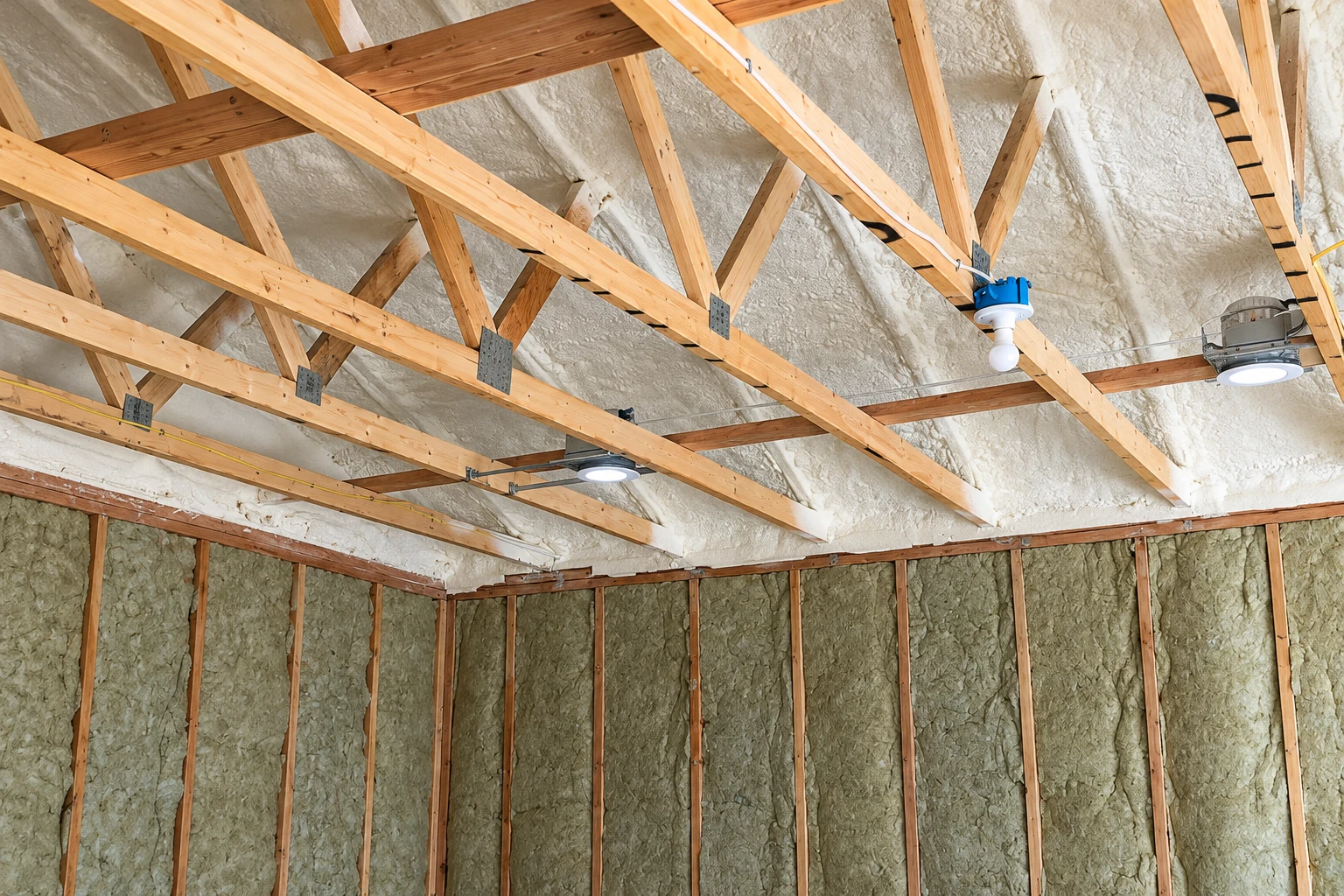
The owner looks at every house
I come out and look at the job myself, so the person giving you the number is the one who crawled your attic. If a spot isn't worth the money, I'll tell you that instead of selling it to you.
Finding the gaps first since 2017
We've been in business since 2017, and I was crawling attics on a crew all through school. We're known for the dull part, finding the leaks, wet spots and hazards before any insulation goes in.
Fully licensed and insured in California
We're fully licensed and insured, so the people working in your attic are covered. Satisfaction guaranteed on every job. If you want me to take a look, call (831) 245-4007 or send the form below.
Home insulation in Hollister, done in order
Home insulation means sealing the air leaks in your house and adding insulation to the attic, floors, crawl space or basement rim joists, the wood band sitting on the foundation. It's for anyone with a drafty room, a hot upstairs, cold floors or a power bill that seems too high.
We're based in Hollister and work in the cities around it, so call and ask if you're not sure we come out your way. The price moves with how much of the house needs work, whether old insulation has to come out, how hard the attic is to reach and which material you pick. The schedule turns on the same things plus any repairs that go first, and your written estimate lays out what to fix first.
Across the country, sealing and insulating together can save up to 20% on heating and cooling costs on average, so treat that as a typical result and not a promise for your house. California's Energy Code covers work on existing homes as well as new ones, and its standards for the shell of a house depend on the climate zone it sits in. The state also licenses insulation contractors under a classification of their own.
Home insulation and the work that comes before it
Start where it makes the most difference
I walk the whole house and tell you which spot will make the biggest difference, so you can start there instead of paying for everything at once. Sometimes that's a thin attic, and sometimes it's cold floors that need crawl space insulation. On material, foam costs more and seals air while it insulates. For most houses I'd seal the gaps and top up the loose fill instead, unless your ductwork runs through the attic, where foam usually earns its price.
Clear out what shouldn't stay
New insulation laid over old material that got soaked or filled with droppings just buries the problem, so when that's what we find, we plan insulation removal first. Before attic work, the attic gets checked for leaks, moisture, pest or structural damage, and you get a list of repairs. Live knob and tube wiring, the old kind strung on porcelain knobs, gets replaced or properly boxed before insulation goes over it. A furnace or water heater that vents on its own draft gets a combustion safety test, a check that exhaust isn't spilling back indoors, before the attic work starts.
Even coverage with the eaves open
Insulation piled deep in the middle and thin at the edges is backward, so we pay close attention to the edges. Before loose or batt insulation goes on the attic floor, baffles go in at the eaves, short chutes that keep air moving from the vents under the roof overhang up to the ridge instead of blowing through the insulation. Bury those vents and the attic stops breathing, and moisture shows up in the framing. On any blown-in job, it's fair to ask whether rulers get stapled in a few spots so you can see the depth is even and how it settles.
Get a free on-site home insulation estimate
We reply within one business day, and the estimate is free with no obligation. After you send the form, we get back to you and I come out to look at the attic, crawl space or walls myself.
(831) 245-4007How a home insulation job goes
You call, I come look
Call (831) 245-4007 or send the form, and we'll get back to you to set a time. It helps to know your home's age, how to reach the attic and any old insulation, wiring or fuel-burning equipment you've noticed.
Written estimate, permit sorted
You get a written estimate listing what needs fixing first and what we'd do. Permit rules depend on where the house sits, so I check with the city or county building office for your address, and we handle the permit when the job calls for one.
We install, I check
Our crew does the sealing and insulation. When they're done, I check the work myself, and then we walk through it with you so you can see what went in and where.
Home insulation questions from Hollister
How much does attic insulation cost in Hollister?
Across the US, attic insulation usually costs about $1,700 to $2,500 per job. That's the national going rate for an attic, not our price, and a house that needs old material removed, repairs or more than the attic can land somewhere else. Your own figure comes from the written estimate after I've looked at it.
Is blown-in insulation cheaper than batts for an attic?
Blown-in insulation is usually cheaper than batts for an attic, and it usually covers better too. Loose fiberglass, rock wool or cellulose blown through a hose fills in around framing and wiring where pre-cut blankets leave gaps, though installation costs can vary. That's why it's worth pricing both before you choose.
What should I do if my attic has vermiculite insulation?
Leave it undisturbed and hold off on attic work, because vermiculite may contain asbestos and the EPA recommends leaving it alone. If you decide to have it removed, that job belongs to a trained, accredited asbestos abatement contractor who's independent of whoever assessed it. We plan the rest of the work around that.
Should air leaks be sealed before adding insulation?
Yes, seal first. Money spent on insulation can be wasted if the holes and gaps in ceilings, walls and foundation stay open, because air carries heat right past it. Air sealing, closing gaps around can lights, pipes and the attic hatch, gives you the most when it comes first in the plan and in the quote.