
Open-cell foam insulation in Hollister CA - a sealed attic and quieter rooms below
Hot upstairs or ducts baking in the attic? We spray open-cell foam under the roof deck so the attic seals tight and stays quieter.
I look at your attic myself
When you call, I'm the one who climbs into the attic, not a salesman. Our crew does the install, and I check the work before we call it done. Satisfaction guaranteed on every job.
Running this business since 2017
I worked summers on insulation crews all through school and started this business in 2017, so we're 9 years in. We're best known for the unglamorous part, finding the gaps and the problems before any foam goes in.
Licensed and insured for insulation work
We're fully licensed and insured. California's state licensing board counts anyone installing insulation for heat or sound control as an insulation contractor, and spraying foam is part of that. Call (831) 245-4007 and I'll come take a look.
Open-cell spray foam in Hollister
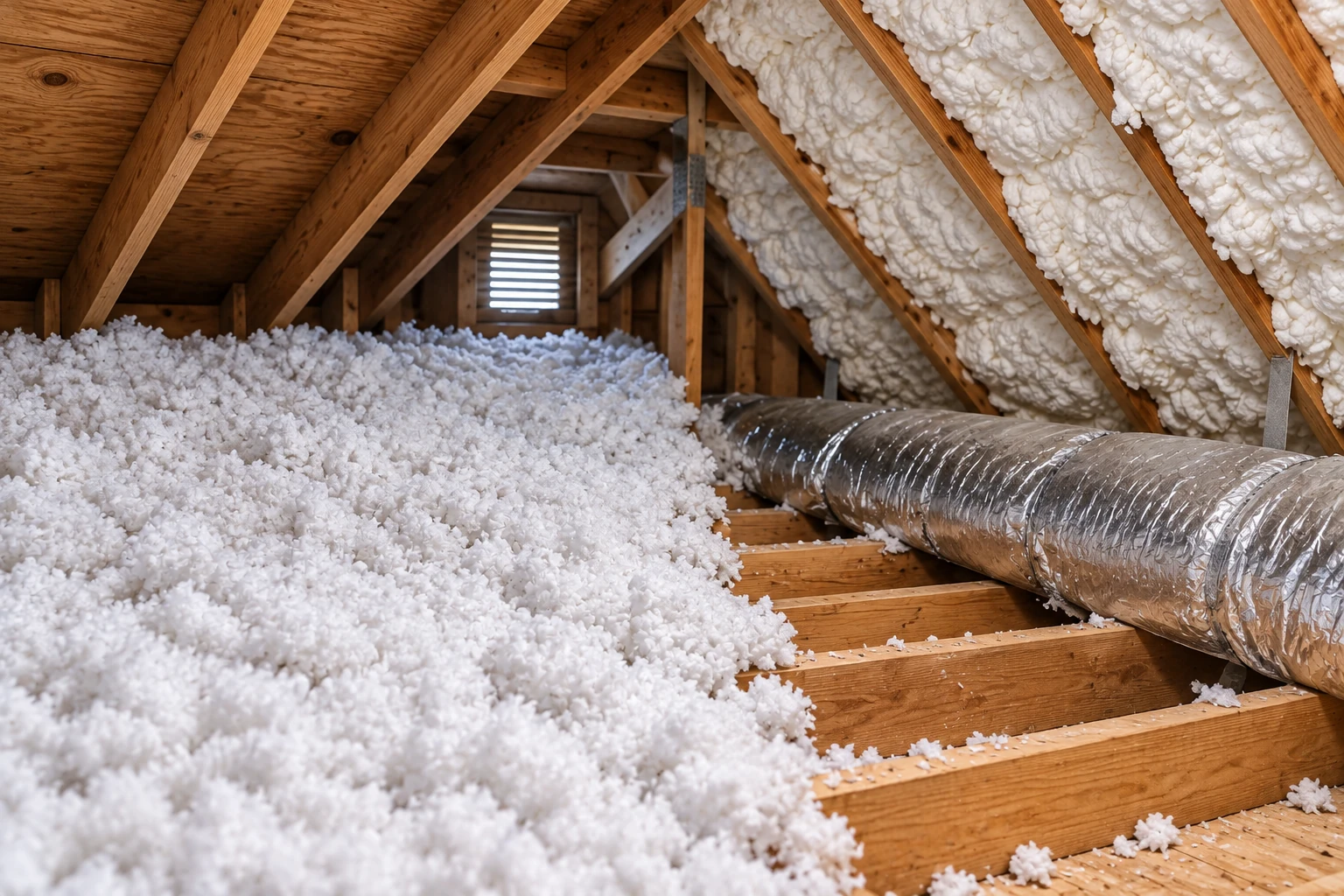
Open-cell foam insulation is foam we spray in place, usually on the underside of your roof, where it insulates and stops air leaks in one pass. It helps Hollister homes with a hot upstairs, ducts in the attic or a noisy roof.
Most calls start with a bedroom that won't cool off or a power bill that keeps climbing, and the attic is usually why. The price moves with the size of the roof deck, how thick the foam goes and how much prep the attic needs before we spray. The schedule turns on attic access and on getting your household out for the spraying. The written estimate lays all of it out for your house.
Foam isn't always the answer. It costs more than sealing the gaps and topping up loose fill, and in a plain attic that cheaper route usually wins, so I'll tell you. Foam earns its keep when your ducts or furnace live in the attic. Hollister sits in the warm marine zone on the national energy map, and California's energy code sets its rules for walls, roof and windows by state climate zone, so we check what applies to your address.
Open-cell foam, attic prep and where else it fits
Under the roof deck, on a budget
Open-cell is the budget pick of the spray foams and the quieter one, so I usually suggest it under a roof deck when cost or noise matters most to you. We spray it along the underside of the roof, which seals the attic in with the rest of the house. Your ducts, furnace and whatever's stored up there end up inside the insulated shell instead of sitting in attic heat. Rain on the roof gets quieter too. If neither cost nor noise is your big worry, ask me about closed-cell.
Fixing the attic before any foam
Foam sprayed over a problem keeps the problem. Before we start, I look for old insulation that's wet or full of droppings, wiring that shouldn't get buried and leaks the foam won't reach, and whatever needs to come out or get fixed gets dealt with first. Some attics have hosted more raccoons than people. Some foams need a covering, like a coating or drywall, when the product or the code calls for it, and some need none, so we settle that before we quote.
Buildings and crawl spaces too
Business owners ask about open-cell for offices and shared walls because it blocks sound well, and that's part of our commercial insulation work. It stops air but lets water vapor pass through, so it isn't what keeps ground moisture out from under a house. Down there we usually start with a crawl space vapor barrier over the dirt, because insulation in a damp crawl space mostly just holds the damp.
Get a written estimate for open-cell foam in your attic
We reply within one business day and set a time for a free on-site estimate, with no obligation. Have your attic size, any appliances up there and any health concerns ready when you call (831) 245-4007 or send the form.
(831) 245-4007How an open-cell foam job goes
You call, I look myself
Call or send the form, and once we get back to you, I come out to look at the attic and anything up there. Mention asthma, allergies, skin problems or a past reaction to spray foam chemicals, since that can point to another insulation.
Written estimate and planning
You get a written estimate listing what needs fixing first and what we'd do. We go over how we'll close off and air out the work area, how temperature and humidity that week affect the spraying, and where you'll stay.
Crew sprays, I check it
Our crew does the spraying while the house is empty. When it's safe to come back, I check the work, and we walk through it with you so you see what you paid for.
Open-cell foam questions from Hollister
What does open-cell spray foam cost near Hollister?
In the San Jose area, open-cell foam usually runs about $1,900 to $2,800 per job for 1,000 square feet at 3 inches thick. That's the area's going rate, not our price. Your own number comes on the written estimate after I've seen the attic.
Is open-cell or closed-cell foam better for my home?
Open-cell is better when budget or noise matters most, and closed-cell is better when you want the most insulation per inch. Open-cell costs less and blocks sound much better, but it has a lower R-value, the measure of how well insulation slows heat. Closed-cell foam is about twice as efficient per inch, and the dense foam also blocks moisture.
Do we have to leave the house during spray foam installation?
Yes, plan to be out during the spraying and for at least 24 hours after, which is what federal consumer safety staff advise. How long the fumes hang around depends on the foam and the house, so line up somewhere for the whole family and the pets. We go over the safety steps with you beforehand.
What changes in my attic once it's sealed with foam?
A sealed attic needs a way to get rid of moisture, and any gas furnace or water heater up there should be a sealed-combustion unit that vents straight outside. The attic no longer airs out through vents, so we check both before we spray, and an appliance that draws its air from the attic gets sorted out first.